Birthday Star 3D Layered Paper Cut - SVG
In the landscape of digital design and small business operations, the difference between a generic output and a memorable experience often lies in the details. For entrepreneurs, educators, and creative professionals, the ability to produce high-quality, tactile assets from digital files is not merely an aesthetic choice; it is a strategic lever for engagement. The Birthday Star 3D Layered Paper Cut - SVG represents a sophisticated intersection of modern vector technology and traditional craft. It is designed for those who understand that while digital efficiency drives scale, physical touchpoints drive emotional connection.
This asset is not simply a graphic; it is a structural blueprint for depth. By utilizing layered paper cut techniques, creators can transform flat surfaces into dimensional art. This guide explores how to integrate this specific design into your workflow, why the file formats provided matter for operational flexibility, and how to approach its use with intentionality to maximize impact.
Understanding the Asset: More Than Just a Graphic
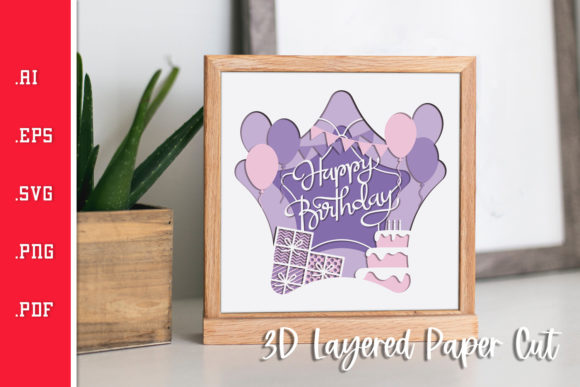
The core value of the Birthday Star 3D Layered Paper Cut - SVG lies in its architecture. Unlike standard raster images or single-path vectors, a 3D layered design requires precise separation of elements. Each "layer" corresponds to a distinct piece of material—cardstock, foam board, or heavy paper—that must be cut individually and then stacked. This stacking creates shadows and perspective, giving the image volume without the need for complex machinery or expensive printing processes.
For decision-makers in marketing and branding, this offers a unique opportunity. In a world saturated with screen-based content, a tangible, three-dimensional object commands attention. When you send a physical birthday card featuring this layered star, you are signaling effort and thoughtfulness. You are moving beyond the transactional nature of automated emails and establishing a human connection. This is particularly relevant for client retention strategies, employee recognition programs, and personal brand building among freelancers and consultants.
Technical Specifications and Workflow Integration
One of the most critical aspects of any digital asset purchase is the versatility of the file formats provided. A rigid workflow can bottleneck production, whereas a flexible toolkit allows for adaptation across different platforms and skill levels. With this purchase, you receive a zipped folder containing the design in AI, EPS, PDF, SVG, and transparent PNG files. Each format serves a specific strategic purpose:
- SVG (Scalable Vector Graphics): Ideal for digital displays, web integration, and direct input into cutting machines like Cricut or Silhouette. The scalability ensures crisp edges regardless of size, which is essential for maintaining professional quality.
- AI and EPS: These are industry-standard vector formats for Adobe Illustrator. They allow for deep editing, color manipulation, and scaling without loss of resolution. This is crucial for designers who need to customize the design to fit specific brand guidelines before production.
- PDF: Perfect for sharing with print shops or for use in other vector software. It preserves the layer structure and vector data, ensuring compatibility across different operating systems.
- Transparent PNG: Useful for quick previews, social media mockups, or placing the design over other backgrounds in photo editing software. The transparency allows for seamless integration into composite images.
Furthermore, the inclusion of a PNG flipped version for manual hand cutting is a significant practical addition. Not every creator has access to automated cutting machines. Many hobbyists, teachers, and small business owners prefer the authenticity of hand-cutting. The flipped version accounts for the mirror-image requirement when tracing designs onto paper, reducing errors and frustration during the preparation phase. This thoughtful inclusion lowers the barrier to entry, making the asset accessible to a wider range of users.
Strategic Use Cases for Professionals and Creators
How should you deploy the Birthday Star 3D Layered Paper Cut - SVG? The answer depends on your goals, whether they relate to branding, customer experience, or internal culture.
- Enhanced Client Gifting: For service providers such as real estate agents, financial advisors, or coaches, sending a personalized gift on a client’s birthday can strengthen relationships. A layered paper cut is far more memorable than a standard e-card. It demonstrates that you remember the individual and have invested time in their appreciation.
- Educational Materials: Educators and homeschooling parents can use this design to teach geometry, spatial reasoning, and fine motor skills. The layering process involves understanding depth, alignment, and proportion. It turns a simple celebration into a hands-on learning activity.
- Event Decor and Branding: Small business owners hosting launch parties or anniversary events can use these cuts as table centerpieces or wall decor. The 3D effect adds visual interest to photography, which is vital for social media content creation. High-quality visuals improve organic reach and engagement rates.
- Digital Product Creation: Freelancers and bloggers can incorporate the SVG into larger digital projects. While the primary use is physical, the vector files can be used to create digital stickers, website headers, or email newsletter graphics that mimic the layered look, maintaining consistency across channels.
Operational Considerations and Risk Management
While the potential benefits are clear, relying on physical production introduces variables that do not exist in purely digital workflows. To achieve better results, one must anticipate these risks and plan accordingly.
The Importance of Material Selection
The success of a 3D layered cut depends heavily on the substrate. Thin printer paper may tear easily and lacks the rigidity needed to hold layers apart. Conversely, thick cardboard may be difficult to cut manually and can cause strain on cutting machine blades. For optimal results, consider using cardstock ranging from 80lb to 110lb. Experimentation is key; test different colors and textures to see how they interact under light. Shadows play a crucial role in the 3D effect, so contrasting colors between layers can enhance depth, while monochromatic schemes offer a subtle, elegant look.
Time and Resource Allocation
Crafting 3D paper cuts is time-intensive. For solo entrepreneurs or small teams, this can become a bottleneck if not managed correctly. Do not rely on this method for high-volume, low-touch communications. Instead, reserve it for high-value interactions where the return on investment justifies the labor. If you are producing multiple units, consider batching the process: cut all base layers first, then assemble them in a dedicated station. This reduces context switching and improves efficiency.
Clarifying Expectations: Digital vs. Physical
It is imperative to note that this is an instant digital download, NOT a finished product. Mockups are for preview only and are not included in any designs. Misunderstanding this distinction can lead to frustration. You are purchasing the blueprint, not the building. This requires a mindset shift from passive consumption to active creation. The value is unlocked only through your execution. Ensure you have the necessary tools—cutting mats, precision knives, adhesive dots or glue sticks, and alignment guides—before beginning.
Decision-Making Framework for Adoption
Before integrating the Birthday Star 3D Layered Paper Cut - SVG into your routine, ask yourself the following questions to ensure strategic alignment:
- What is the objective? Are you trying to delight existing clients, educate students, or decorate an event? Define the outcome clearly.
- Who is the audience? Will they appreciate the craftsmanship? Some audiences may prefer simplicity, while others will value the artisanal touch.
- Do I have the capacity? Can I dedicate the time required for cutting and assembly without compromising other critical tasks?
- Is the quality consistent? Can I reproduce the same level of detail multiple times if needed? Consistency builds trust.
If the answers indicate a positive alignment, proceed with planning. Start by creating a sample batch. Test the durability of the adhesive, the stability of the layers, and the overall visual impact. Refine your technique based on these tests. Over time, you can develop a standardized process that minimizes waste and maximizes output quality.
Long-Term Value and Creativity
Investing in versatile, high-quality digital assets like the Birthday Star 3D Layered Paper Cut - SVG supports long-term creativity and brand differentiation. It encourages a habit of thoughtful creation, where every touchpoint is considered carefully. In an era of automation, the human element becomes a premium feature. By choosing to engage in the physical crafting process, you are investing in relationships and experiences that resonate deeply.
Moreover, the skills developed through working with layered vectors—precision, patience, and spatial awareness—are transferable. They enhance your overall design sensibility and problem-solving abilities. Whether you are designing a logo, planning a layout, or organizing a project, the discipline learned from assembling a complex 3D cut can inform your broader professional practice.
Ultimately, the Birthday Star 3D Layered Paper Cut - SVG is more than a decorative item. It is a tool for communication, a medium for education, and a vehicle for brand expression. By approaching its use with strategy, preparation, and care, you can leverage its potential to create meaningful connections and achieve superior results in your personal and professional endeavors.