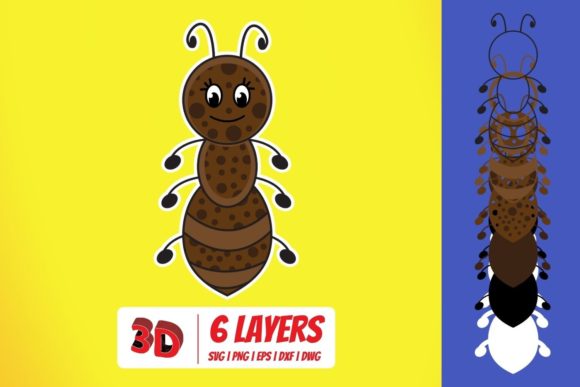
3D Ant SVG: Elevating Digital Craftsmanship and Small Business Branding
In the evolving landscape of digital fabrication and small business branding, precision and versatility are no longer just nice-to-have features—they are fundamental requirements. Among the myriad of design assets available to creators, the 3D Ant SVG stands out as a prime example of how detailed vector art can bridge the gap between whimsical creativity and professional execution. Whether you are a hobbyist looking to add a unique touch to a home organization project or an entrepreneur crafting a memorable logo for an eco-friendly pest control service, understanding the technical nuances of this asset is crucial for achieving high-quality results.
The relevance of the 3D Ant SVG extends far beyond simple decoration. It represents a shift in user expectations toward three-dimensional depth in two-dimensional media. Modern consumers and clients appreciate designs that pop off the page, offering visual interest without the complexity of full 3D modeling software. This trend has driven demand for SVG files that contain layered data, allowing cutting machines to interpret depth through shadow lines, gradients, and distinct cut paths. For professionals in the maker space, having access to such optimized files means less time spent troubleshooting layer separations and more time focused on production and client satisfaction.
Understanding the Technical Ecosystem of 3D Ant SVG
To fully leverage the potential of a 3D Ant SVG, one must understand the ecosystem of software that supports it. The file format is not merely a static image; it is a dynamic blueprint designed for compatibility across a wide range of digital cutting and design platforms. The inclusion of multiple formats—SVG, DXF, EPS, and PNG—in a single zipped download ensures that users with varying levels of technical expertise and budget constraints can utilize the design effectively.
The core component, the SVG (Scalable Vector Graphics) file, is the gold standard for digital cutting. It is compatible with industry-leading software such as Cricut Design Space, Silhouette Designer Edition, Make the Cut (MTC), Sure Cuts A Lot (SCAL), and Brother’s Scan and Cut “Canvas” software. These programs rely on the clean code structure of SVGs to accurately translate digital coordinates into physical cuts. For the serious crafter or small business owner, the ability to edit these layers within Cricut Design Space or Silhouette Studio allows for customization, ensuring the ant design fits perfectly onto various materials, from vinyl stickers to acrylic sheets.
However, not all users operate within the premium subscription models of Cricut or Silhouette. For those using Silhouette Basic Edition, which lacks some of the advanced layer management tools of its counterpart, the included DXF (Drawing Exchange Format) file becomes indispensable. DXF is a widely accepted interchange format that preserves geometric data even in simpler software environments. This ensures that users with entry-level hardware do not miss out on the quality of the 3D Ant SVG design. Furthermore, graphic designers who work in vector-based illustration software will find the EPS (Encapsulated PostScript) file essential. Compatible with CorelDraw, Inkscape, and Adobe Illustrator, the EPS format allows for deep editing of curves and nodes, enabling professionals to tweak the ant’s anatomy or integrate it seamlessly into larger brand identity systems.
Bridging the Gap Between Vector Art and Photorealism
While vectors are powerful, there are times when a creator needs a raster image for marketing materials, social media posts, or web graphics. This is where the PNG (Portable Network Graphics) file included in the download proves its value. Unlike the vector files, the PNG is a photo file with a transparent background, rendered at a high resolution of 300 DPI. This density ensures that when the image is printed or displayed on screen, it remains crisp and free of pixelation.
The inclusion of a 300 DPI PNG addresses a common pain point for freelancers and bloggers who need to quickly generate visual content without opening complex design software. They can drag and drop the transparent PNG into Canva, Microsoft Word, or email newsletters, knowing the ant will look professional against any background. This multi-format approach reflects a modern workflow where agility is key. Creators no longer need to choose between precision cutting and quick graphic design; they have both at their fingertips in a single, organized folder.
Practical Applications and Market Trends
The demand for specialized vector assets like the 3D Ant SVG is driven by several converging trends in the creative and commercial sectors. One significant trend is the rise of niche branding. Small businesses are increasingly competing on uniqueness rather than scale. An eco-conscious landscaping company might use the 3D Ant SVG on branded t-shirts or vehicle wraps to symbolize hard work and community building. A children’s educational toy manufacturer might use it to create tactile learning aids about insects. The 3D effect adds a layer of sophistication that flat silhouettes often lack, making the brand appear more established and thoughtful.
Another area of growth is the DIY home organization market. Platforms like Pinterest and Instagram have fueled a culture of aesthetic productivity. Users are constantly seeking designs that are both functional and visually pleasing. A 3D Ant SVG can be cut from adhesive vinyl and applied to storage bins, labeling systems, or decorative frames. The "ant" motif, often associated with diligence and order, resonates psychologically with customers looking to bring structure to their lives. By providing a design that looks three-dimensional, creators offer a product that feels premium, even if the material cost is low.
Furthermore, the educational sector is embracing digital fabrication. Teachers and educators are incorporating cutting machines into classrooms to teach geometry, symmetry, and engineering principles. The 3D Ant SVG serves as an excellent case study for students. Because the file contains multiple layers representing depth, instructors can guide students through the process of separating these layers, explaining how light and shadow create the illusion of volume. This practical application transforms a simple craft project into a lesson in spatial reasoning and digital literacy.
Maximizing Value Through Proper Workflow Integration
For professionals and entrepreneurs, the true value of the 3D Ant SVG lies in how it integrates into existing workflows. When downloading the zipped folder containing SVG, DXF, PNG, and EPS formats, it is advisable to organize these files immediately. Creating a dedicated project folder for each client or personal project prevents version control issues and ensures that the correct file type is used for the intended output.
When working with Cricut Design Space or Silhouette Designer Edition, always start by uploading the SVG file. Inspect the layers before proceeding to the cut screen. The 3D effect relies on precise alignment of shadow and highlight layers. If you are using a machine with limited color capabilities, you may need to adjust the opacity or color settings to ensure the depth effect translates well to the final material. For instance, cutting black vinyl over white cardstock requires careful attention to registration marks if you plan to layer the pieces manually.
If you are utilizing Adobe Illustrator or Inkscape via the EPS file, take advantage of the opportunity to customize. You might want to adjust the curvature of the antennae to better fit a specific logo layout or change the color palette to match brand guidelines. The vector nature of the EPS file ensures that these edits remain scalable, meaning you can resize the ant for a business card or a billboard without losing quality. This flexibility is particularly valuable for marketers who need to maintain brand consistency across various touchpoints.
Conclusion for the Modern Creator
The availability of a comprehensive package featuring the 3D Ant SVG in multiple formats underscores a broader shift in the creative economy: accessibility and professionalism are becoming intertwined. Users no longer need to invest in expensive, proprietary ecosystems to achieve high-end results. By leveraging the compatibility of SVG with Cricut and Silhouette, the utility of DXF for basic editions, the design freedom of EPS in CorelDraw and Adobe Illustrator, and the convenience of 300 DPI PNGs, creators can tackle a wide array of projects with confidence.
As technology continues to democratize design tools, the emphasis shifts from merely owning the software to mastering the workflow. The 3D Ant SVG is not just a clipart image; it is a versatile asset that supports diverse applications, from educational demonstrations to commercial branding. By understanding the strengths of each format and applying them thoughtfully, professionals, hobbyists, and businesses can produce work that is not only visually striking but also technically sound. In a market saturated with generic content, the attention to detail provided by a well-structured 3D vector file offers a competitive edge, proving that even the smallest details, like an ant, can make a big impact.